Showing posts with label aristocracy. Show all posts

Friday, November 25, 2011

The Clerical Aristocracy: An Addictive Cultural Box


W
e have seen how and when bishops took for themselves the style and purple culture of the aristocracy, and how that culture is now totally integrated within the episcopacy. In the next few issues we want to describe relevant components of that culture as it exists today, and as it impacts on the matters mentioned in the first issue of this blog, matters important to the laity and to their sense of participation.

First of all, any culture has many addictive attributes. We float in our culture with only rare consciousness of it. It inhabits us and we act or don’t act out of it without awareness of our non-reflection on it. We assume, again non-reflectively, that the culture that supports us is the best culture in the world. An analogy of culture is easily seen in a common science lesson: If you throw a frog into boiling water, it will immediately jump out and save itself. If, however, you put that frog into water at room temperature and then bring the water to boil, the frog won’t realize what is happening and will perish. The latter example perfectly describes culture.

Experts tell us that addictions can be either substance addictions (drugs, alcohol, etc.) or process addictions (gambling, sex, work, religion, etc.). Addictions seize control over one’s life and the addicted person needs outside help to regain their life.

Cultural anthropologists and psychotherapists agree that organizations can be addictive and that the addiction extends to the particular culture of the organization. The episcopacy is easily compared to a corporate entity, and just like that of any corporate entity, the culture of the episcopacy is addictive.

Within the organization the message goes out that the organization (episcopal culture) comes first. The priority given the episcopal culture leads to an attempt to control everything and everyone in the organization. An insider of the culture does not question the culture and the policies that support it. The sense of interior perfection also prevents insiders from accepting wisdom from the outside. We will see the cultural consequences of denigrating and ignoring intelligence from the laity as we progress through each of the components of the bishops’ culture.

The bishops’ unique form of denial, the common defense mechanism used by addicts to protect their addiction, is best found in their use of Scripture. They project their culture as coming directly from Jesus, a fantasy drawn and expanded beyond any rational recognition, to “prove” that He founded a monarchical church: “You are Peter, and on this rock I will build my church.” (Matthew 16:18). But, as we have seen, the monarchical structure of the Roman Catholic Church had its beginning only four centuries after Jesus. The monarchical culture with its class separations came into existence and embedded itself thoroughly into the daily details of the church only from repeated unfounded affirmations, evasions and lies, the common tools of addicts.

Our bishops live in an addictive cultural box.
        

Friday, November 4, 2011

Shoring Up the Purple Culture: The Church Turns Away From Equality


T
oday, we deal with the Bishops’ response to the question of equality within the Church. Have we returned as a Church to the egalitarian quality of the gospel and the first four centuries of church history? Obviously, no! Is the tinseled clerical aristocracy defunct as is the secular aristocracy? No again! Do the laity have a voice that is heard by the clerical aristocracy? Not at all, unless we reduce the level of conversation to what type of flowers should go on the altar for a particular feast, or to their listening to attorneys in the present sexual abuse crisis. Does the wisdom of the laity enter into declarations of appropriate moral behavior? No. It is not an exaggeration to say that our bishops today inhabit a purple culture that is as unheeding of the laity as the aristocratic culture of old was to its peasants.

As the monarchical world of secular aristocrats declined following the French and American Revolutions, the Vatican felt threatened. Along with its nostalgia for the monarchies that fell, it felt itself in jeopardy. The pope and bishops mounted steps to secure their status. Those steps went further than the condemnations decreed against the liberating forces. 

At the insistence of Pope Pius IX, in July, 1870, the First Vatican Council, with its Declaration of Papal Infallibility, established a new monarchy, one of moral and doctrinal dominance. The Pope now had two monarchies, both absolutist, the Papal States and the newly defined Spiritual Kingdom. The possession of two kingdoms lasted only three months as the foreseen absorption of the Papal States into a united Italy occurred in September, 1870. Still, the Pope and bishops retained their newly formed kingdom. And this new spiritual kingdom maintained all of the aristocratic trappings of the old order. The Pope remained a king. Bishops were still princes. In sum, the clerical aristocratic structure and purple culture remained the same as it had been, and has to this day.

To support the legitimacy of this new kingdom the Vatican began to load the practice of Catholicism with images that subtly carried the message. A feast of Christ the King was established by Pius XI in 1925. The feast of the Queenship of Mary followed in 1954, established by Pius XII. Both feasts work subliminally to validate the aristocratic (purple) culture of the Church. It is difficult to believe that they foster the images of Jesus and Mary that we glean from Scripture.

The Pope and bishops continue to dub knights of various papal orders with all the pomp and ceremony of old. The liturgy remains today a visible celebration of aristocratic manners and style. In liturgical ceremonies we see the throne, the royal garb, the etiquette of bows, genuflections and kneeling, precious metal chalices and ciboriums, all taken from the aristocratic life style. There is, in fact, an ongoing effort to restore all changes to the liturgy made by the Second Vatican Council, especially a return to the Latin language, exclusive to the clerical kingdom. 

Bishops of past centuries had wealth-producing constituencies and appointments. Today as well, bishops have virtually unlimited access to money. In recent times we have witnessed how easy it is for a bishop to reach into the till to cover personal peccadillos, to travel at will, and to live in luxurious abodes. And the laity have no way to give significant input into such expenditures. If bishops utilize lay boards, the members are handpicked by the bishops themselves.


In the past issues of this blog we have seen the history of how and when the episcopacy took on the status consciousness and cultural lifestyle of the aristocracy. We have also seen the shallowness, narcissism, and cultic characteristics native to that culture. In the coming issues we will look at just how this culture has affected moral and doctrinal issues.

We hope you will stay with us.

Friday, October 28, 2011

Equality and the Church: Post-Revolutionary U-turns


H 
ow did the Church react to the ousting of the secular aristocracy?  First, when asked to support the French revolution, Pope Pius VI roundly condemned it in 1791 in the ironically titled encyclical, Caritas.  The condemnation was the opening move by the Vatican against the emerging liberalism, liberty, and equality.

Shortly after the French Revolution, calls began to be heard suggesting that the Church take a leadership role in the cause of liberty. Surely, people said, freedom is consistent with and even lies at the heart of the gospel message and the whole of Sacred Scripture.
          

Felicité Robert de Lamennais, born prior to the revolution, a scholar, priest and author, engaged a group of followers in this cause. Because there was governmental interference with the Church at every level: governance, education, etc., Lamennais stated that separation of Church and State, complete freedom for the Church, was in the Church’s best interest.


Lamennais and his followers started a daily newspaper, L’Avenir, The Future. Its slogan was "God and Liberty." It subscribed to the full liberating agenda: complete religious liberty, freedom of education, freedom of the press, etc. Lamennais wanted to start a movement based on his belief that this concept of liberalism would find its proper home in the Church. L’Avenir attacked the bishops as blind, worldly and cowardly.

As you might suppose, tremendous opposition arose among the clerical aristocracy to these ideas. The final denunciation came from Pope Gregory XVI in the encyclical Mirari Vos. (1832). In the encyclical he complains that the Church is afflicted with indifferentism. A brief quote says it all: “And so from this rotten source of indifferentism flows that absurd and erroneous opinion, or rather insanity, that liberty of conscience must be claimed and defended for anyone…. Nor can we foresee more joyful omens for religion and the state from the wishes of those who desire that the Church be separated from the State.”

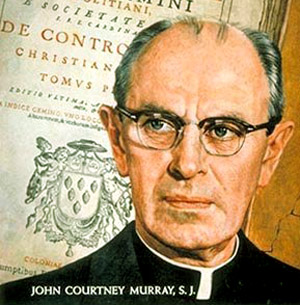
Thanks to the wisdom and efforts of an American Jesuit, John Courtney Murray , insanity made a U-turn and became sanity when the second Vatican Council made plain in its Declaration on Religious Freedom (1965): “In all his activity a man is bound to follow his conscience faithfully…. It follows that he is not to be forced to act in a manner contrary to his conscience. Nor, on the other hand, is he to be restrained from acting in accordance with his conscience, especially in matters religious.” And in the same document: “Government is to assume the safeguard of the religious freedom of all its citizens.” 

There we have it: freedom of conscience and separation of church and state. It is just one of many examples down through history where bishops have made a U-turn in their positions on moral issues.

In our next issue, we will look at the bishops’ post-revolution position on equality. 

Sources:  
 
The Documents of Vatican II, edited by Walter Abbott, S.J.


The Sources of Catholic Dogma, by Henry Denzinger


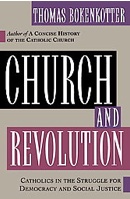
Church and Revolution:  Catholics in the Struggle for Democracy and Social Justice, by Thomas Bokenkotter.

Friday, October 14, 2011

The Purple Culture in Bloom


W
e are looking at the culture of the episcopacy as it evolved over time. Father Thomas Bokenkotter, priest and historian, notes that by the time of the French Revolution (1789), the aristocratic families had gained complete control over the appointment of bishops.   
Their sons were often installed in Episcopal palaces before they were dry behind the ears.    
Those sons carried with them into the episcopacy the same culture that we described in the previous issue of this blog.   
They were often more interested in worldly affairs and the gossip of the court than in spiritual matters. 
Bishops lived lavishly.   
Luxury abounded in episcopal palaces and even in the houses of many of the religious orders whose abbots and abbesses lived and traveled in princely style.  
The purple culture of the bishops was in full bloom.


A relevant example: A curé(Pastor) at that time was paid 300 livres per year. A bishop received up to 400,000 livres. That’s a 1 to 1,333 ratio.
           
What about the relation of the aristocracy, both secular and episcopal, to the common people, the non-aristocrats and the laity? Frankly, the latter were almost totally discounted.
They were useful as servants, but had little to offer except their labor, their taxes, their adulation and, of course, their use as cannon fodder. In its modern-day formulation it was “pay, pray and obey.” 

The reality was that the rest of humankind seldom entered the aristocratic consciousness. If the aristocrats happened to notice the dire poverty and terrible sufferings of the masses, they generally did little more than thank God that they were not of that class. Their perspective was supported by the common theology of that time: As they were aristocrats by the grace of God, just so the grace of God had established those others in their misery.


But, then came the FRENCH REVOLUTION. The causes of the revolution are complex and not the subject of this blog. It is enough to say that it sprang from the long-suffering discontent of the peasants and the middle class. It was shock and awe, filled with blood and horror, a revolt ultimately against a caste system that penetrated both society and the church. It brought its battering rams to the walls of established privilege and under the clear call of liberty and equality, privilege fell brick by brick. The peasants took their voice back. Their first word was revolution.
           
In the next issue we will take a brief look at the results of the revolution as they affected both the secular and the clerical aristocracy. 

 Resource:

Friday, September 23, 2011

Romancing the Aristocracy by Tweaking the Christian Message


We are looking at how the Church lost its egalitarian foundation, and we are still looking at the fourth and fifth centuries.  Bishops and emperors worked together to convert the Roman Senatorial Aristocracy.


We will look first at how the bishops responded to the task.  

In short, they shaped the Christian message to appeal to aristocrats and their status concerns. Honor is the key element. Honor derives from leading the Christian life, and the Bishops claimed that ecclesiastical offices bring greater status and honor than do secular offices. 


Friendship was brought into the Christian context.  Friendship furthered spirituality.  However, they did not make friendship a relationship that went beyond the status group.  It was confined to the group and fostered honor as always.  It was not preached as an egalitarian relationship.  It was not exhibited as a friend is a friend for the sake of a friend as Socrates defined it.  It was not Jesus saying, “I call you friends because I have taught you all that the Father has taught me.”  It remained a self-directed honor that flowed from the quality of one’s friends.


Wealth was also defended from the vantage point of the honor it could bring. We hear St. Ambrose saying, “There is no crime in being rich, only in not employing one’s wealth in proper fashion.” Wealth could be used in charitable causes and thereby bring honor to the donor.  Patronage brought honor, whether from representing notable clients in the Senate or from efforts such as building a church.  Paulinus of Nola, a bishop, preached that the poor “will place you above their own children, they pray for you, in all of the public places they acclaim you.”


Being recognized for possessing an intellectual culture conveyed honor to an aristocrat.  Christian preachers boasted that their literary culture was as old and as prestigious as any of their pagan contemporaries.  After all, they possessed a religion of the Word. 

Pagan Priesthood was often sought for by members of the aristocracy for the honor it brought.  Bishops touted the superiority of the Christian priesthood.  Nobility, which came with high office or from high birth, brought honor.  Christian leaders pointed to Christian piety as providing greater nobility.  However, the examples they pointed to were men and women of the aristocracy.

In brief, all of the cultural value components of the aristocracy became part of the Christian vocabulary. The Christian message had been tweaked to lure aristocrats into the Church.

Next week, we look at the contributions of the emperors in attracting aristocrats to Christianity.


See also:


The Making of a Christian Aristocracy: Social and Religious Change in the Western Roman Empire
 The Making of A Christian Aristocracy, by Michelle Renee Salzman.  Harvard University Press, 2002.


Purple Culture


The Purple Culture, by Stephen Boehrer

Friday, September 16, 2011

When in Rome. . . Appealing to the Roman Aristocracy


We are dealing with the questions:
  • How and when did Christianity lose its egalitarian structure? 
  • How did the masses lose their ability to have input into matters of administrative, doctrinal, disciplinary and devotional practice in the Church? 
  • How did “pray, pay and obey” come to define the role of the laity?

We return to the fourth century. As we all know, the Emperor Constantine brought legitimacy to the Christian religion early in that century. He and subsequent emperors favored Christianity in many ways, but they did not have the power to impose this new religion on a population immersed in paganism

This imperial lack of power was especially true in regard to the Roman aristocracy who possessed power and wealth that was critical for the support of the emperors. Realizing that the way to conversion of the masses was through the conversion of the aristocracy, emperors and bishops united in a two-pronged effort.

What united the aristocracy was the "status" culture they shared. The deepest concern of aristocrats was their status in the world. Max Weber, the noted sociologist, makes these distinctions: Class is based on wealth; e.g. middle class, upper class. Party is based on power; e.g. Democrat, Republican. Status groups are based on honor, however honor is conceived. 

The Roman aristocracy was a status group for whom honor was everything. And honor for them was aristocratic standing, and aristocratic standing came from peer recognition. Only by meeting the expectations of their peers would anyone gain acceptance, the guarantee of aristocratic standing. So to be in the group, you had to play to one another within the confines of the group.

While both the emperors and bishops wanted to convert this group to Christianity--and with aristocratic help and example, convert the masses--the conversion could not be forced. And there was no way that this status group was going to relinquish the status center of its culture. Consequently, the emperors and bishops had to use terms and concepts that were attractive to and consistent with traditional senatorial values. In short, they had to appeal to and not threaten the status concerns of the aristocracy.

Bishops were able to make headway in converting aristocrats because they found ways to assure them that this new religion was not a threat to their status concerns, but in fact supported their status concerns.
What were those status concerns? Above all, of course was honor. Acceptance and recognition by peers, other aristocrats, was the most basic component of the aristocratic status culture. What brought them this acceptance and recognition? Social conventions such as friendship (one received honor from the number and prestige of one’s friends); family networks; nobility (nobility was an attribute derived from either noble birth or high office); the correct religion (aristocrats often sought a pagan priesthood for the honor it brought); patronage (honor that came from the status of clients they represented in the Senate and from construction of temples, etc.); recognition for high moral character; recognition for having an intellectual life; and wealth.
Next week we will look at how both emperors and bishops met these status concerns.

See also:

The Making of a Christian Aristocracy: Social and Religious Change in the Western Roman EmpirePrimary Resource for this section: The Making of A Christian Aristocracy, by Michelle Renee Salzman.  Harvard University Press, 2002.